Your Cart is Empty

MAY BOXES SOLD OUT - ORDER NOW FOR JUNE CLUB DELIVERY
MAY BOXES SOLD OUT - ORDER NOW FOR JUNE CLUB DELIVERY

A signature bourbon gift isn't the most expensive bottle on the shelf. It isn't the one with the fanciest label. It's the one that says — without you having to say it — that you thought about this. That you knew what he drinks, or at least knew how to find out. That you weren't just crossing a name off a list. Whether the bourbon is going to a client, a father-in-law, a groomsman, or a friend with a big milestone coming up, the gift is doing double duty: it's for them, but it's also saying something about you.
This guide is for the gifter who wants to get that right. No sampler kits, no novelty bottles, no gift cards. Just a straight answer to the question: what makes a bourbon gift actually feel signature?
Signature isn't a flavor profile. It's a feeling. A signature bourbon gift is one the recipient remembers specifically — they remember the bottle, the occasion, and (crucially) who gave it to them. A generic nice bottle doesn't do that. Neither does a gift basket with a bottle in it. What makes something signature is that it has a reason. You picked this because, not just because.
Three things tend to do the job:
Hit two of those three and the gift lands. Hit all three and it gets remembered.
Before you pick anything, a quick grounding. Bourbon is American whiskey made from a mash bill that's at least 51% corn — the grain that gives bourbon its sweeter, rounder character compared to scotch or rye. It has to be aged in new charred oak barrels. It doesn't have to be made in Kentucky, but most of the good stuff is.
Within bourbon, the terms that matter most for a gift:
You don't have to memorize all of these. You just have to know what you bought, so you can say a sentence about it when the bottle gets opened.
If you want something to physically hand over — a wrapped bottle on a birthday, an anniversary, a retirement — the play is to skip the default shelf at the big liquor store and go one level deeper. Ask the shop if they do store picks. A store pick is a single barrel the shop chose exclusively, meaning nobody else carries that exact bottle. If your local place does them, grab one. Even if the recipient has had the brand before, that specific bottle is a one-off.
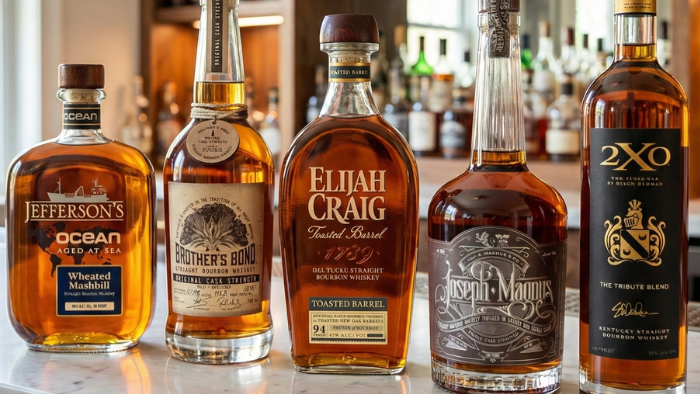
If store picks aren't available, reliable signature-worthy picks include:
Any of these can carry a gift on their own. Pair one with a hand-written note explaining why you picked it, and you've earned the word "signature."
Here's the move most people don't think of: the signature-est bourbon gift isn't a bottle. It's a subscription. Because a subscription does all three things — story, length, and match — automatically.
PourMore's Bourbon-of-the-Month Club sends a full-size 750ml bottle every month, hand-selected by a team that does nothing but taste bourbon for a living. Each bottle arrives with a story — who made it, why they picked it, what's worth noticing when he pours it. That's the "story" and the "match" covered. The length takes care of itself: the bottles keep coming for three months, six months, or twelve, depending on the plan you pick.
From the recipient's side, that's a gift that lands every month. They open the first one at their birthday (or holiday, or retirement party) and keep opening them long after everyone else has forgotten what they gave. That's signature by definition.
The tier choice is how you make the gift feel specifically chosen. It's the thing that says "I picked this level for you."
Intro — approachable bottles, friendly price. Right for the casual bourbon drinker or the recipient who's newer to the category.
Explorer — where most gifters land, and where most subscribers stay. The bottles here get genuinely interesting — limited runs, single-barrel picks, the stuff that doesn't usually reach your zip code. Right for anyone who has a "good bottle" shelf and notices when something new lands on it.
Enthusiast — the top tier. Allocated bottles, the ones most people can't get on their own. Right for the bourbon drinker who already knows names like Weller, Stagg, and Michter's by sight.
When in doubt, Explorer is the answer. It's the tier that's hardest to get wrong. The how it works page walks through every tier in plain English.
The thing that kills most subscription gifts is the billing. Somebody eventually gets a surprise charge, and the gift turns into a conversation about credit cards. PourMore's prepaid gift plans don't auto-renew. You pay once. The recipient gets their bottles. When the plan ends, it ends. No awkward charge popping up on their statement six months later.
Three-month, six-month, and 12-month plans all work that way. Which gives you real flexibility in matching the gift to the occasion. A smaller thank-you gift? Three months. A milestone birthday? 12 months. A retirement? 12 months with a note.
The move that makes a signature gift unforgettable is combining a physical bottle with a subscription. Get them something to unwrap on the day — a single-barrel bottle, a store pick, something specific — and pair it with a 6-month or 12-month subscription. The bottle handles the moment. The subscription handles the memory. Six months after the occasion, when the third shipment shows up, the recipient is still thinking about you.
A signature gift also signals something about the relationship itself. Here's how to think about the scale:
In every case, the quality of the specific pick matters more than the dollar amount. A $45 Eagle Rare with a handwritten note about why you picked it lands better than a $200 bottle you grabbed off a shelf.
The worst version of a bourbon gift is one where the giver tries to perform expertise. If you don't know bourbon deeply, don't fake it. A better move: be specific and honest. "I read that single barrel means every bottle is a little different from the others — I thought that was a cool thing." That's more interesting and lands better than "This is a premium small-batch expression." Small batch, by the way, means the bourbon was blended from a relatively small number of barrels — usually fewer than 20. It's a step toward consistency without losing the character of individual barrels.
The rule: know enough to say one true, specific sentence. Let that sentence do the work. The bourbon will handle the rest.
Before you buy anything, run the gift through a quick filter. Can you say a full sentence about why you picked this specific bottle? Does the gift keep working past the day you hand it over? Does it match the recipient's actual taste? If you can answer yes to all three, you've landed a signature gift. If you can't, the fix is usually a subscription — it answers all three questions by default.
For more on what separates a good bourbon gift from a forgettable one, the birthday bourbon gift guide is the companion read. If you're looking for something broader across the whiskey category, the whiskey gift ideas buying guide covers more ground. And for gifts tied specifically to big moments, the whiskey gifts for special occasions guide is the next stop.
A signature gift isn't the one that cost the most. It's the one that's still doing its job when the occasion is a memory. Pick the one that keeps working.
Copyright Pourmore, Inc. 2026
*If you have a shipping issue or delay please do not hesitate to reach out and we will do our best to address the issue.
States we cannot ship to:
AK, UT, MI
This is a subscription service, all orders (except prepaid gifts) by default renew. Just e-mail us at any questions Contact@Pourmore.com
Orders do not arrive in the wooden box seen in some graphic displays.
PourMore relies upon a network of third party retailers, vendors, distributors, and couriers. When an order is placed it is placed with a licensed third party who fulfills the order. At no time does PourMore take title to, possession of, or inventory related to any order placed on pourmore.com. We are not a retailer.
Copyright Pourmore, Inc. 2026
*If you have a shipping issue or delay please do not hesitate to reach out and we will do our best to address the issue.