Your Cart is Empty

OCTOBER BOXES SOLD OUT - ORDER NOW FOR NOVEMBER CLUB DELIVERY
OCTOBER BOXES SOLD OUT - ORDER NOW FOR NOVEMBER CLUB DELIVERY
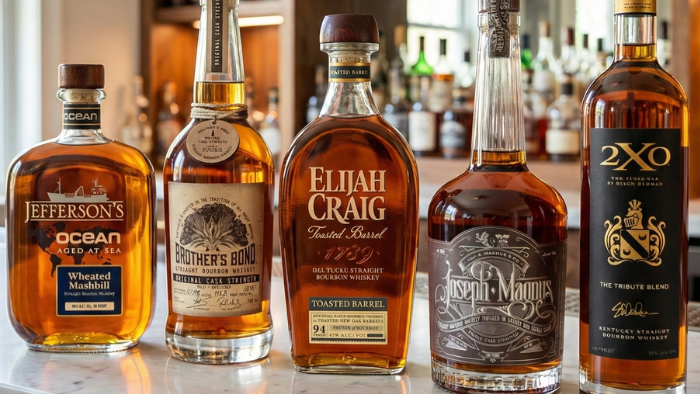
High-proof bourbon isn't about bravado — it's about what the barrel actually produced before anyone cut it with water. Most of the bourbon on a shelf is bottled between 80 and 90 proof. The distillery drops the proof with water to hit a consistent number across every bottle, to stretch the yield, and to make the whiskey friendlier on the first sip. That's not a criticism. It's just what most bourbon is.
High-proof bourbon — usually meaning 100 proof or higher, often pushing toward 130 — is the exception. These bottles go into the glass closer to how the whiskey came out of the barrel. More concentrated. More textured. Louder in every direction. If you've been drinking bourbon for a while and felt like the 90-proof pour stopped surprising you, high-proof is where the surprises live.
A few terms get used interchangeably, and they shouldn't be. Here's what each actually means.
Proof vs. ABV — proof is simply ABV doubled. A 100-proof bourbon is 50% alcohol by volume. There's no scientific reason to use proof instead of ABV — it's a legacy of an old British test where gunpowder soaked in the liquor was lit to see if it burned. It didn't stick in Britain. It stuck in American whiskey.
Bottled-in-bond — a century-old legal standard that means the whiskey was made by one distiller, in one distilling season, at one distillery, aged at least four years in a federally bonded warehouse, and bottled at exactly 100 proof. In plain English: a receipt of integrity, and a guaranteed floor on both age and strength. Look for "bottled-in-bond" on the label and you already know four things about what's inside.
Barrel proof (or cask strength) — the whiskey goes into the bottle at whatever proof it came out of the barrel, without water added. Because barrels lose water at different rates depending on warehouse position, season, and age, barrel-proof bottles can vary wildly — anywhere from 105 to 140 proof. Batches are often numbered, and the proof is printed on the label.
Single barrel — every bottle in that batch came from one specific barrel. No blending. No averaging out. Single-barrel bottles are often (not always) high proof, and they're the purest expression of how one specific piece of oak treated the whiskey it held.
Overproof — an informal term, usually meaning anything above 100 proof. Not a legal category, just a casual shorthand.
Water is a flavor solvent. When a distillery adds water to drop a barrel-strength bourbon from 125 proof down to 90, two things happen: the alcohol dilutes, and some of the aromatic compounds get carried along with it. You lose intensity. You also lose some of the textural weight that comes from higher alcohol concentration.
A high-proof pour puts all of that back on the table. You'll notice thicker mouthfeel — an almost oily coating on the tongue. You'll notice more layered flavor because the aromatic compounds are more concentrated. Caramel reads darker. Oak reads heavier. Any char, leather, tobacco, or baking-spice notes become more pronounced. And you can actually taste the effect of time in the barrel more clearly, because the barrel-derived flavors haven't been diluted.
The tradeoff: heat. High-proof bourbon lands harder on the first sip. Some people love that. Some people flinch. The fix, every time, is a few drops of water.
A 125-proof bourbon is not meant to be drunk the way you'd drink a 90-proof pour. Here's what actually works.
Start small. Half an ounce. Let it sit in the glass for a minute before you taste it. The ethanol will volatilize off the surface and the aromatics will come up.
Add water — a few drops at a time. Use a straw or a small dropper. Every few drops, taste again. Somewhere between five and 15 drops of water, most barrel-proof bourbons hit a sweet spot where the alcohol recedes and the flavor bloom happens. You're not watering it down for weakness. You're opening it up.
Ignore the ice question — mostly. A large ice cube is fine on a hot day and will dilute as it melts. Small cubes will drop the temperature fast and mute the flavor. The choice between neat, water, and ice isn't a moral question. It's a personal one.
Glassware matters more here than with lower-proof bourbon. A Glencairn or any tulip-shaped glass funnels aromatics toward your nose. A rocks glass spreads them out and lets more ethanol hit you at once. For a $70 barrel-proof pour, use the right glass.
Here are bottles that earn their proof, roughly in order of price.
Wild Turkey 101 (around $25) — a workhorse 101-proof bourbon that's been on shelves for decades. Cheap, honest, and a genuinely good introduction to what extra proof does to flavor. The best $25 bourbon on the shelf right now, full stop.
Henry McKenna 10-Year Bottled-in-Bond (around $45 when you can find it) — 100 proof, 10 years old, single barrel. A lot of bourbon in the bottle for the price. Famously hard to find since it won a big award a few years back, but still findable.
Elijah Craig Barrel Proof (around $70) — released in three batches per year (A, B, and C), each with a different proof and flavor profile. Reliably one of the best high-proof bourbons under $100.
Wild Turkey Rare Breed (around $55) — a blend of six-, eight-, and 12-year bourbons bottled at barrel proof, usually around 116. Tastes like a much more expensive bottle.
Stagg (or Stagg Jr.) (around $90 retail, often much more) — Buffalo Trace's younger, hotter sibling to George T. Stagg. Unhinged in a good way. Usually lands above 125 proof.
Four Roses Single Barrel Barrel Strength (private selection, around $70–90) — released as store picks through local shops. Each one's different because it's, well, a single barrel. Hunt for these.
Once you've spent a few months drinking high-proof bourbon, the 90-proof shelf starts feeling a little thin. That's not snobbery. It's that you've recalibrated. The lower-proof bottles are still useful — they're better for cocktails, better for long pours, better for casual drinks. But for sipping, for actually paying attention to what's in the glass, high-proof is where the conversation is.
It's also where a lot of the most interesting small-distillery experimentation is happening right now. Producers who want to show off what their barrels produced are releasing more barrel-proof and single-barrel bottles than ever. If you want to understand that shift, our piece on small-distillery bourbon covers the landscape. And for specific bottle recommendations across the whole category, the best bourbon brands guide has more.
A barrel-proof pour can hold up to food that a 90-proof bourbon gets lost behind. Big flavors match big flavors. Think dark chocolate, ribeye, blue cheese, smoked meats, spiced desserts. We go deeper on this in our guide to bourbon food pairings, but the short version: don't waste a $90 barrel-proof bourbon on a salad.
High-proof bourbon isn't harder. It's more honest. You're drinking closer to what the barrel produced, which means more flavor, more weight, and more of whatever that specific distillery does well. The first sip takes a second to get used to. Everything after that is better than what you're drinking at 90 proof.
If you'd rather have the high-proof picks sorted for you each month, here's how the club works — our Explorer tier is where most of these bottles live.
Copyright Pourmore, Inc. 2026
*If you have a shipping issue or delay please do not hesitate to reach out and we will do our best to address the issue.
States we cannot ship to:
AK, AR, HI, MI, MS, MT, UT
This is a subscription service, all orders (except prepaid gifts) by default renew. Just e-mail us at any questions Contact@Pourmore.com
Orders do not arrive in the wooden box seen in some graphic displays.
PourMore relies upon a network of third party retailers, vendors, distributors, and couriers. When an order is placed it is placed with a licensed third party who fulfills the order. At no time does PourMore take title to, possession of, or inventory related to any order placed on pourmore.com. We are not a retailer.
Copyright Pourmore, Inc. 2026
*If you have a shipping issue or delay please do not hesitate to reach out and we will do our best to address the issue.