Your Cart is Empty

From The Long Pour. Based on a live interview with Jonathan Harris of Westward Whiskey, recorded 9 October 2026, and on the bottle we poured with him. Westward was our Whiskey club's featured distillery in September. We buy the bottles we ship, and we weren't paid for this piece.
The barrel started its life the usual way, holding Westward single malt for about four years. Then it was emptied and filled with gin. A year later the gin came out and an IPA went in, for 10 months. After that Westward refilled it with two-year-old single malt and left it alone for four more years.
"It is a very, very strange whiskey," Harris told us, "and one of my favorites." Westward has roughly 7,500 barrels in its warehouse for him to compare it against. "I don't have another version of this in the barrel house."
Harris runs Westward's barrel program, he told us, and came to the company as its head of education. The barrel he calls Switchback is a good way into the distillery, because each thing that passed through it is a chapter of how Westward got here: the gin brand that paid the bills, the brewery that supplies the yeast, and the whiskey the whole place was built to make.
In this piece: Beer first · Yeast paid for in bottles · A still that leaves things in · The gin that paid for the whiskey · The four lives of Switchback · One barrel in a hundred · Pinot barrels, filled the same day · The pour · FAQ
Westward was started by brewers. The company, then called House Spirits Distillery, began in Corvallis in 2004 and moved to Portland a year later, at a point when, by Harris's count, the whole country had "probably" 30 to 35 distilleries. He tells the founding as a question of geography. Bourbon exists, he argues, because the East Coast didn't have much barley. Oregon had plenty, along with maltsters, a brewing scene, and a wine valley.
"A lot of people miss out on the narrative that to have whiskey, you first must have beer," he said. "The same way that brandy is distilled wine, which is then aged, whiskey is distilled beer, which is then aged."
The style they settled on is American single malt: 100% malted barley, distilled entirely at one distillery. Westward was in the room when the American Single Malt Whiskey Commission formed in 2016, and the category became a federal standard of identity on 19 January 2025. Harris likes the rule for what it lets a distillery test. Because it has to be made from scratch in one place, "we get to change parts of our process and see how it fundamentally changes the whiskey."
Most distilleries ferment with distiller's yeast or dry yeast, which Harris says won out because it's efficient. Westward uses a brewer's ale yeast, the Chico strain that Sierra Nevada made famous in pale ales, which he says brewers prize for citrus and floral notes.
Westward gets that yeast from Breakside Brewing, in kegs, after Breakside has already brewed beer with it. "We give them at least a bottle a month," Harris said, "and they give us kegs of yeast that have gone into making these legendary beers." The relationship is older than Westward's own brewhouse. In the early years, he told us, Breakside brewed Westward's wash for them.
"A different yeast creates a different whiskey entirely," he said. If you've noticed apricot in Westward Original, which is his own first note for it along with caramel and an herbal, tobacco-ish edge, that's where he says it comes from.
Harris gave us a rule of thumb for reading any still you see on a distillery tour. Look at the arm that carries vapor off the top. "The further up it goes, the cleaner the spirit," he said. Arms pitched steeply upward strip flavor out, which suits gin and vodka. The more an arm tips down, the more flavor comes through.
Westward had a still built the other way, a custom low-reflux pot still. Harris says it holds 3,000 gallons and that its swan neck, the copper section at the top, takes up about 30% of its height. He puts the usual figure closer to 75%. "Essentially we're just taking away all of these filtration methods," he said, "to try and preserve our original character." Add minimal cuts, "this really rough distillation" in his words, and you get the spirit Harris and our host both landed on: oily. He says that weight is why Westward at high proof feels "like a warm bath" instead of a jolt.
A new distillery needs something to sell while its own whiskey ages, and many bottle whiskey sourced from another distillery in the meantime. Westward made gin. The company created Aviation, and sold the brand in November 2016 while staying on to distill it. Harris says they kept making it for the new owners until about 2022.
"Aviation was kind of like our cash cow," he said, "that allowed us to invest in the reason why we founded, which was Westward."
While Westward still owned Aviation, it made a sweeter Old Tom version of the gin and aged it in used Westward barrels. One of those barrels spent about a year soaking up Aviation's botanicals, cardamom among them. Then Breakside's Wanderlust IPA went in, for 10 months. That's a long time for a barrel-aged beer, Harris says, and beer pulls less from the wood than spirit does.
Then came the two-year-old Westward, for four more years.
Westward is big and oily by design, and Harris says "it took a lot to rock it onto being something that's citrusy and something that's herbal and floral." On the nose he gets grapefruit or pomelo, and he picked up clover honey as well. On the palate it stays sweet instead of going "full herbal," which he says sometimes happens when a whiskey leans too far into its botanicals. "It kind of still captures this bright pop."
Our host's notes were cardamom, bitter orange, and a wildflower honey, with the gin showing up on the finish. Harris calls barrels like this Mythical Creatures.
Of those 7,500 barrels, Harris told us, about 75 have made his cut as single barrels. Our host did the math on air: one percent.
Getting there starts around year three, when the team noses barrels and sorts them by what stands out over the house character: sweet, woody, herbal. Most go into blends. For the flagship they pull about 100 barrels, nose them all, drop about 20, taste the other 80, and keep about 40. Those 40 make the house flavor. "Single barrels are the anomaly," Harris said.
He splits his single barrels roughly in half. One half are the best of the warehouse. The other half are experiments, some in second- and third-use oak, and that half is where Switchback lives. Past about eight and a half years, he says, Westward goes "a little more herbal than I like it," and his 10-year barrels have reached around 140 proof while giving back only half to two-thirds of a barrel. "Age is about balance," he said. "Older is not always better."
Harris calls the Pinot finish Westward's Pacific Northwest take on the sherry and port casks of Old World single malt, made with what the Willamette Valley has. Westward finishes its Original for up to two years in French oak casks that held Pinot Noir, and Harris says the winery proximity is the whole point. They fill a wine barrel the same day the winery empties it, with nothing added to keep it fresh.
"There are very, very few that have the proximity that allows us to fill the same day as their dump date," he said. Bergström was the first winery they worked with, by his account; now there are about five core wineries and 20 or so occasional ones.
He admits to a type. Almost every finish he falls for at first runs about four years, double the usual length, and the longest he's run spent seven and a half years in a Pinot barrel from Portland's Boedecker Cellars.
| Bottle | Club and tier | Proof | The short version |
|---|---|---|---|
| Westward Pinot Noir Cask | Whiskey · Explorer | 90 | Original, finished in Willamette Valley Pinot casks |
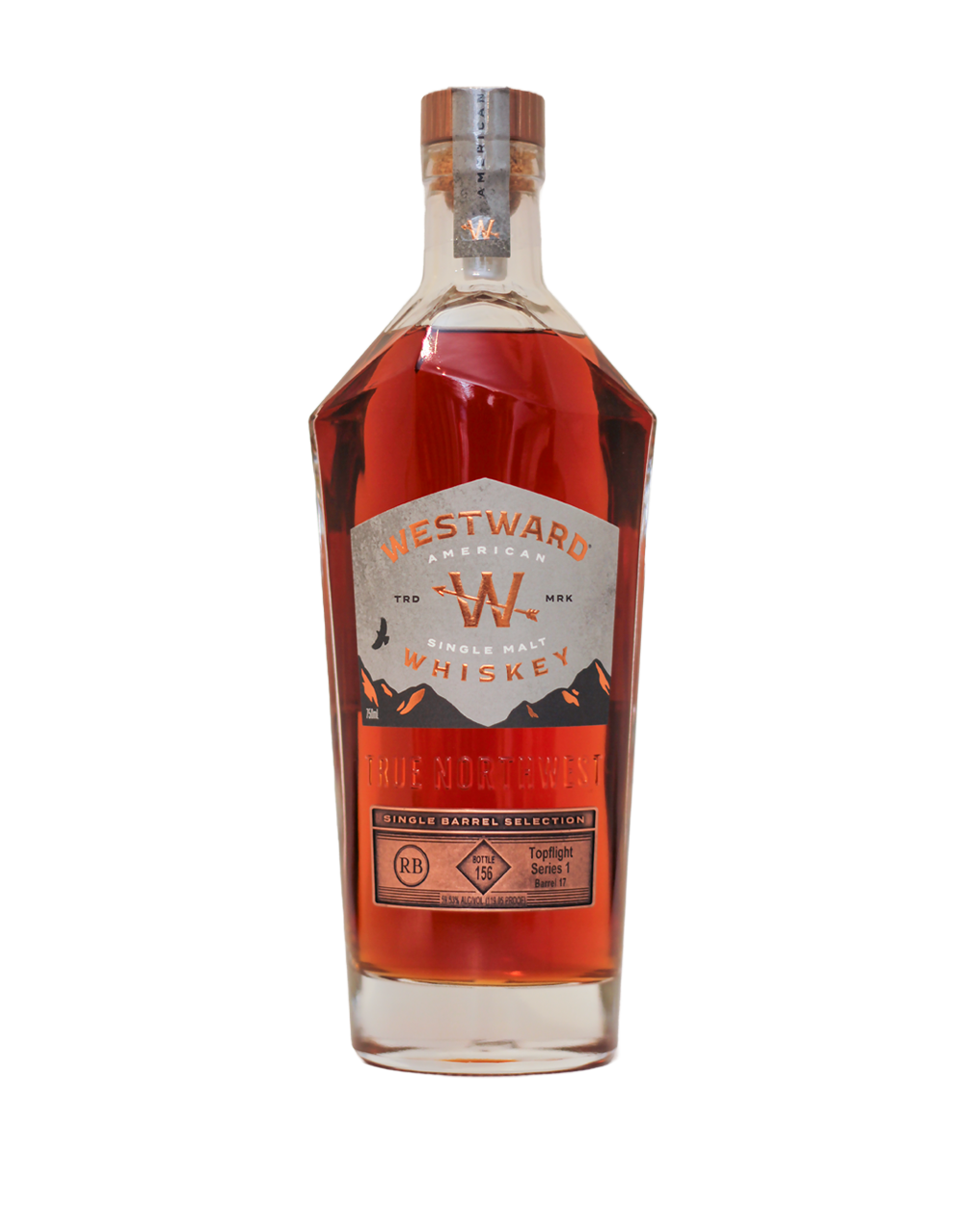
| Westward Switchback single barrel | Whiskey · Enthusiast | 119.05 | Whiskey, then gin, then IPA, then whiskey again |

Pinot Noir Cask. Our host tasted a different Pinot bottling Harris had sent him, eight years old and 125 proof, so his notes aren't the ones to expect here. Westward's own notes for this bottle list orchard fruit, tobacco, and cut grass, then raisin, fig, and apricot, with dark chocolate and herbal oak on the finish. Harris's description of what Pinot does to Westward is simpler: the fruit, "amped all the way up."

Switchback. One barrel, bottled at 119.05 proof. Start with a small pour and a few drops of water. Look for the citrus first, then the honey and cardamom, and let the finish show you which of its earlier lives held on.
Westward was in the room in 2016 when distillers started pushing for an American single malt category. Harris spent far more of our call on yeast, on the angle of a pipe, and on what a beer leaves behind in a barrel. On why a finish works at all, he had one line: "The barrel is alive and well with what's inside of it."
Westward was our Whiskey club's featured distillery in September, with the Pinot Noir Cask for Explorer members and Switchback for Enthusiast. See the Whiskey club.
Where is Westward Whiskey made? In Portland, Oregon. The company started in Corvallis in 2004 and moved to Portland in 2005.
Is Westward an American single malt? It is. Westward makes it from 100% malted barley at a single distillery, which meets the federal American single malt standard that took effect on 19 January 2025.
Did Westward make Aviation Gin? Westward's company created Aviation and sold it in 2016, then kept distilling it for the new owners for several years.
What is the Switchback barrel? A Westward barrel that first held Westward single malt, then Aviation Old Tom gin, then Breakside's Wanderlust IPA, before two-year-old Westward went in for four more years. It was bottled at 119.05 proof.