Your Cart is Empty

MAY BOXES SOLD OUT - ORDER NOW FOR JUNE CLUB DELIVERY
MAY BOXES SOLD OUT - ORDER NOW FOR JUNE CLUB DELIVERY

The whiskey advent calendar shows up every November as a gift problem with no obvious answer. Twenty-four small pours behind little cardboard doors sounds like a great idea on paper. In practice, most of them are mediocre — small samples of bottles the recipient could have bought themselves, packaged inside a box that costs more than the whiskey it contains. This guide is for the gift-giver trying to decide whether the advent calendar is the right play, and what to do if it isn't.
The honest version. A whiskey advent calendar is a box of 24 small sample bottles — usually 30ml each — arranged behind 24 numbered doors. The recipient opens one a day from December 1 to December 24. The pours are samples, not full bottles. Twenty-four samples at 30ml each works out to roughly the equivalent of one full 750ml bottle, broken into pieces.
The pricing varies wildly. Lower-end advent calendars run $80–$150 and contain mostly entry-level whiskies the recipient could have grabbed at the local store. Higher-end calendars run $250–$500 and include rarer expressions — single malts, allocated bottles, single-cask picks. The price-per-pour at the higher end starts to make sense; at the lower end, you're paying mostly for the packaging.
If you're committed to the advent calendar play, three things separate the calendars worth buying from the ones that aren't.
Pour size. Most calendars are 30ml. Some are 20ml — those are too small to fairly evaluate a whiskey. Skip anything under 30ml. A 50ml calendar (a "miniature" bottle pour) is the upgrade tier and worth the extra cost if your recipient takes whiskey seriously.
Bottle quality. Look for the brand list before buying. A calendar that lists its bottles ahead of time — and includes single malts, single-barrel picks, or allocated releases — is selling whiskey. A calendar that hides the bottle list is selling packaging. The recipient won't know what they're getting until they open each door, which sounds fun until day 17 when the bottle is something they could have bought for $25.
Variety. A good calendar covers a range — bourbons, ryes, scotches from different regions, maybe Irish whiskey or Japanese whisky for variety. A calendar that's all bourbon, or all scotch from one distillery, defeats the discovery purpose of the format.
The honest critique. A 24-pour advent calendar costs roughly what a single mid-shelf bottle costs, but the recipient ends up with 24 samples of bottles they can't pour again. The format converts a single great bottle into 24 small experiences — which sounds democratic but mostly works against the way most people actually drink whiskey. The recipient pours one sample on December 5, doesn't love it, can't go back and try it again the next night. The format is built around novelty, not around getting better at whiskey.
That's also why advent calendars tend to be gifts the recipient is polite about. They open the box, they smile, they try the first three, they get busy with the rest of December, and by December 15 the calendar is sitting half-finished on the counter. The gift technically delivered. The recipient never actually got to live with any of the bottles.
A monthly subscription does the opposite of what an advent calendar does. Instead of 24 small samples in one month, the subscription sends one full 750ml bottle every month for the duration of the plan. The recipient gets to live with each bottle — pour it on a Friday, pour it again on a Tuesday, pour it when a friend comes over. The format builds depth instead of novelty.
A monthly whiskey club at the Explorer tier runs roughly what a higher-end advent calendar costs over the equivalent time period — and the recipient gets twelve full bottles instead of 24 vials. The bottles are hand-selected by a team that tastes whiskey for a living. Not a sample pour. A real bottle, picked for the person you bought it for.
If you want to keep the advent calendar tradition but extend the gift past December 25, the move is to pair a smaller-scale calendar (a 12-day calendar, or a high-quality 24-day at the 50ml tier) with a prepaid 6- or 12-month plan that starts arriving in January. The calendar covers December. The plan covers the rest of the year. The 12-month prepaid gift plans don't auto-renew, so the recipient gets the bottles without having to manage anything past the holiday.
The card connects them: "December is for the calendar. The rest of the year is for the bottles."
Two recipients specifically. The first is someone new to whiskey who wants to try a lot of different styles without committing to a $40 bottle they might not like. The 30ml format gives them a way to scout the category. The second is the seasoned whiskey drinker who wants the novelty of opening a new pour each day and doesn't care that the format isn't economical — for them, the calendar is an event, not a value calculation.
For most other recipients — most adult whiskey drinkers who already know what they like and would rather live with a bottle than scout 24 samples — the subscription is the better play.
If the advent calendar isn't right for your recipient, a few alternatives that pair with the holiday season specifically.
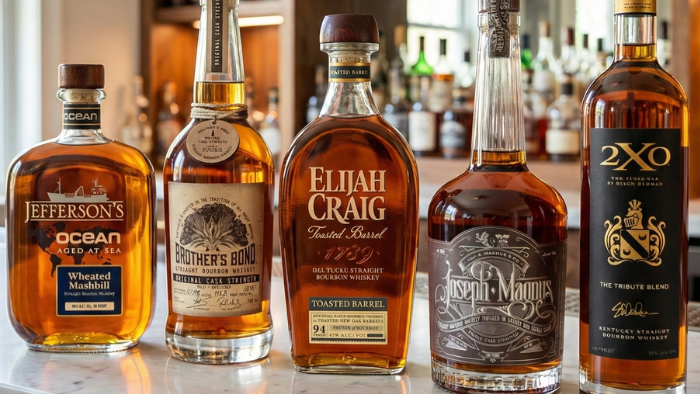
A nice single bottle plus a card that explains why you picked it works for any whiskey drinker. A wheated bourbon — softer, sweeter, with wheat replacing rye as the secondary grain — pairs well with the kind of food that shows up at holiday tables. A peated scotch holds up to dark chocolate and aged cheeses. A high-rye bourbon — drier and spicier — cuts through richer dishes like duck or prime rib. The five bourbon and food pairings guide covers the pairing logic. For more on the holiday gift lane specifically, the top 10 bourbons to gift this holiday season guide walks through bottles worth considering.
If you go the subscription route, the tier matters. Intro works for the recipient who drinks whiskey occasionally and doesn't go deep. Explorer is the default for most holiday whiskey gifts — limited runs and single-barrel picks at a tier where the bottles consistently surprise. Enthusiast is the deep end for the recipient who's a serious collector. The how it works page walks through the tier breakdown.
The advent calendar is fine if your recipient values the novelty of opening a new pour each day and doesn't mind paying a premium for the packaging. For most other recipients — the seasoned whiskey drinker, the bourbon enthusiast, the recipient who'd rather live with a bottle than sample 24 — the prepaid subscription play is the structurally better gift. Same approximate budget. Twelve full bottles instead of 24 vials. A team picking the bottles. A plan that ends naturally without auto-renewal.
If you want to see the gift options laid out in one place, the gift page takes about 90 seconds and walks through exactly what arrives. The holiday whiskey gift that lands isn't the box with the most doors. It's the one that's still showing up next March.
Copyright Pourmore, Inc. 2026
*If you have a shipping issue or delay please do not hesitate to reach out and we will do our best to address the issue.
States we cannot ship to:
AK, UT, MI
This is a subscription service, all orders (except prepaid gifts) by default renew. Just e-mail us at any questions Contact@Pourmore.com
Orders do not arrive in the wooden box seen in some graphic displays.
PourMore relies upon a network of third party retailers, vendors, distributors, and couriers. When an order is placed it is placed with a licensed third party who fulfills the order. At no time does PourMore take title to, possession of, or inventory related to any order placed on pourmore.com. We are not a retailer.
Copyright Pourmore, Inc. 2026
*If you have a shipping issue or delay please do not hesitate to reach out and we will do our best to address the issue.