Your Cart is Empty

Leopold Bros
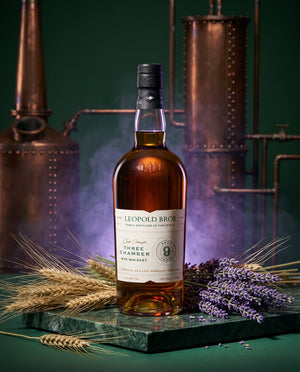
A three-chamber still is a stack of wooden-and-copper chambers that the beer drips down through while steam rises up. Big pre-Prohibition rye distillers used them. They made oily, heavy whiskey and they were slow, so after Prohibition the industry dropped them for column stills. Leopold Bros re-engineered one from old manuscripts and calls itself the first distillery in the world in over fifty years to run one.
The grain is old too. The mash is 80% Abruzzi rye, an heirloom variety Maryland's rye distillers favored in the late 1800s, plus 20% barley Leopold malts on its own floor. Todd Leopold told us Abruzzi carries a lot of linalool, the compound behind lavender's smell, which is why "craft funk" in their rye usually means flowers.
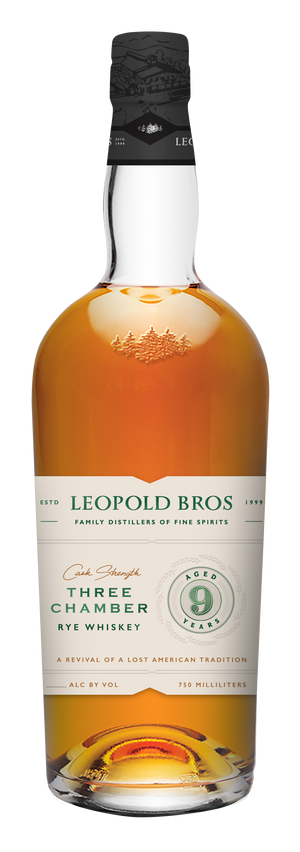
This is a small vatting of 9-year-old casks that ran between 52% and 59%, and Leopold calls it the oldest and highest-proof Three Chamber Rye it has released. Every Leopold whiskey goes into the barrel at 100 proof. In Denver's dunnage warehouse the proof sat still for years, then finally started climbing. Leopold's tech sheet puts it this way: "the ABV has slowly crept up and the flavors are more concentrated than ever."
What's a three-chamber still?
A still with three stacked chambers. The fermented mash flows down from chamber to chamber while steam comes up through it, so the alcohol is stripped out gradually. It's slow and wasteful by modern standards, which is why it disappeared, and it makes a heavier, oilier spirit than a column still.
What's Abruzzi rye?
An heirloom rye variety brought over from Italy and grown for Maryland's rye distillers before Prohibition. Leopold has farmers grow it for them.
Is this the same as the Three Chamber Rye flask?
No. The 200ml flask is an 8-year bottled-in-bond at 100 proof. This 750ml is 9 years old at cask strength.

