Your Cart is Empty

Leopold Bros
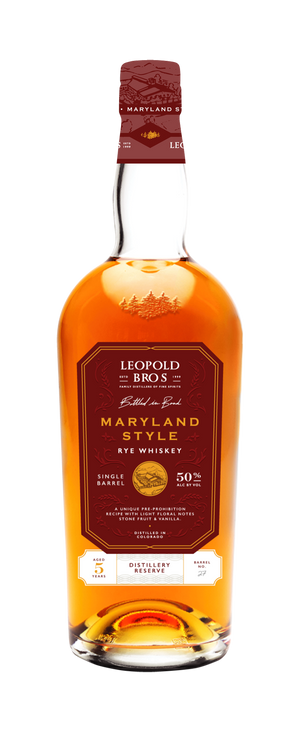
Before Prohibition, rye came in two regional styles. Pennsylvania's was spicy. Maryland's was softer and fruitier, and Union soldiers stationed around Washington during the Civil War drank a lot of it. The last Maryland rye distillery from that era shut in 1972. A collector let Todd Leopold taste a run of real Maryland ryes from 60-plus years ago, and he catalogued what they tasted like, then worked backward to a recipe.
That recipe is 65% rye, 15% corn and 20% barley malted on Leopold's own floor. The yeast is picked to bring out the rye's fruit instead of its spice. It's pot distilled, aged five years in new American oak in their Denver dunnage warehouse, and bottled in bond.
Bottled in bond is a federal standard from 1897: one distillery, one distilling season, at least four years in a bonded warehouse, and exactly 100 proof. This one is also a single barrel, so the barrel number is written on every label and each one is a little different.
What makes a rye "Maryland style"?
Softer and fruitier than the spicy Pennsylvania style, usually with some corn in the mash. Leopold's version gets there with a 65% rye mash and a yeast chosen for fruit.
What does bottled in bond mean?
It's a legal standard: made by one distillery in one season, aged at least four years in a government-bonded warehouse, and bottled at 100 proof.
Why is there a barrel number on the label?
It's a single barrel. Every bottle comes from one cask, and the number tells you which.

