Your Cart is Empty

The Long Pour — PourMore's monthly editorial. Decoded, one bottle at a time.
By the PourMore editorial team. We hand-select every bottle that goes into our members' boxes. This is Part 1 of two — the story we can tell now. Part 2 comes after we sit down with the blender and taste through the barrels with him.
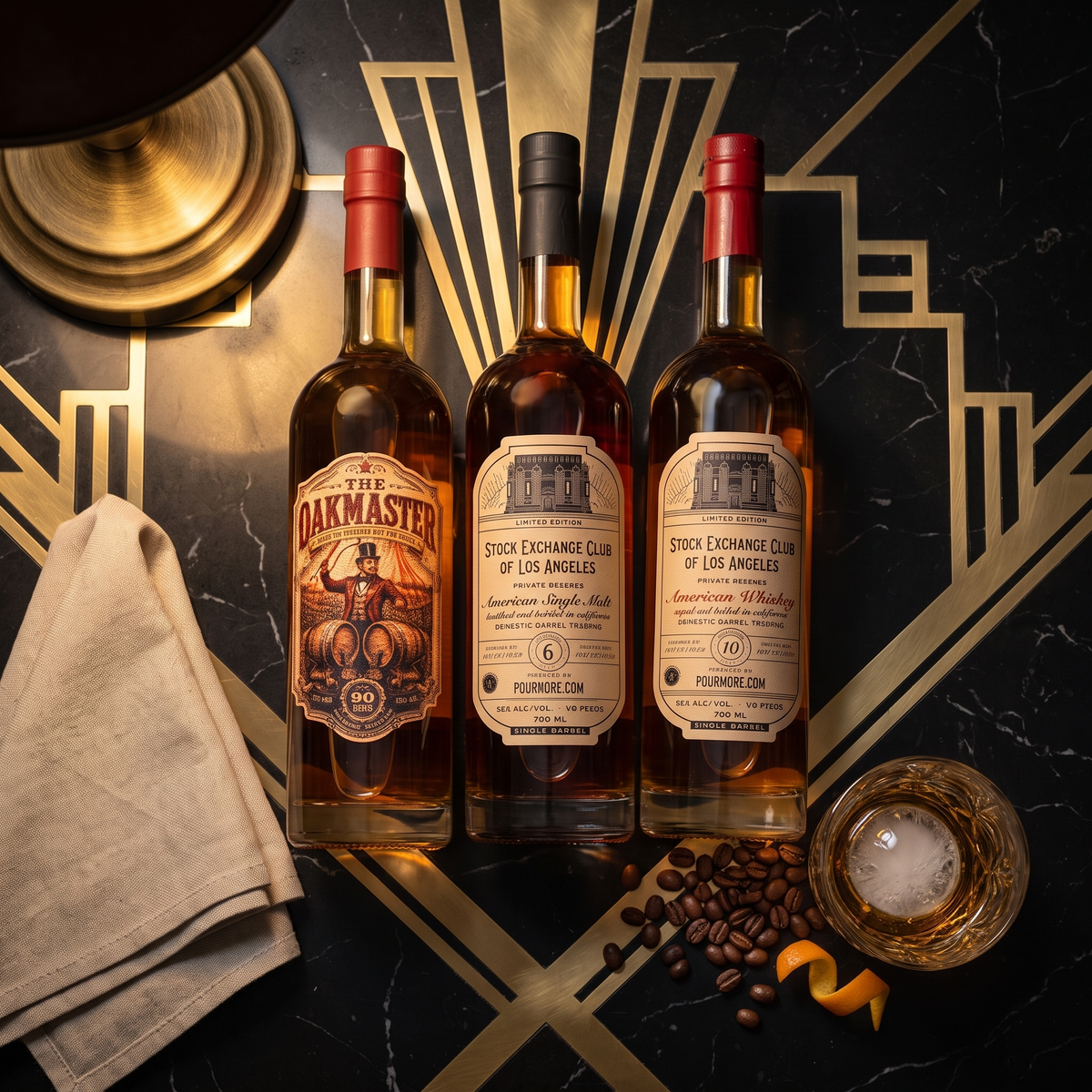
The short version: The three Stock Exchange Club of Los Angeles bottles in your box this month are barrel picks — whiskeys Seth Benhaim hand-selected one at a time: two single barrels and a small blend he built himself. Benhaim founded Broken Barrel Whiskey Co. and is an award-winning blender, and here's why that matters — anyone can bottle a single barrel, but a pick is only ever as good as the palate choosing it. Here's what a barrel pick really is, the blender behind these, and what's in your three bottles.
In this piece
You've seen "single barrel" on a shelf. On its own, it isn't much of a promise. Every distillery has thousands of barrels, and any one of them can be bottled by itself and called single barrel — some are extraordinary, plenty are ordinary. The label tells you the whiskey came from one cask. It tells you nothing about whether that cask was any good.
A barrel pick is the part that matters. It's what happens when someone tastes through a stack of those barrels and hand-selects the one worth bottling — and passes on the rest. Same mechanic as a single barrel, turned toward the thing that actually decides quality: not that it's one cask, but that a specific person chose this cask on purpose, because it stood out from the ones around it.
Which means a barrel pick is only ever as good as the palate doing the picking. Hand the job to someone who knows exactly what they're chasing and you get a bottle that punches well above its category. Hand it to someone going through the motions and you get… a single barrel. The name on the selection is the whole ballgame.
These were picked by Seth Benhaim, and his palate has the hardware to back it up. He's taken Best-in-Show and Double Gold at the San Francisco World Spirits Competition, and his own label, Broken Barrel Whiskey Co., has pulled Double Gold there too. His whole craft is knowing what a great barrel tastes like and building whiskey around it — so when a blender with that resume tastes through a rack of casks and points at one, it's a very different proposition from a single barrel pulled off a line at random.
Stock Exchange Club of Los Angeles is Benhaim's vintage-inspired label: hand-selected barrel picks and small, deliberate blends of American whiskey, rooted in Los Angeles with ties to R6 Distillery in El Segundo — the outfit trademarked as "LA's First Bourbon." He doesn't limit himself to any one distillery's stock, which is why your three bottles don't share a single origin story. One was distilled in Kentucky a decade ago and re-barreled in California; one is an American single malt; one is a blend of Kentucky rye and bourbon. What ties them together is the person who chose them.
Each of these was bottled in a tiny, one-time run — a single cask here, a small marriage there — chosen for PourMore members. That's why our name sits on the label next to his: cask by cask, these were picked for our people by a blender we trust.
Each tier got a different one of Benhaim's picks this month. Here's what landed, and what to look for when you pour it.

The Oakmaster — your Intro bottle. A blend of Kentucky rye and bourbon, aged a minimum of four years and bottled at an easy 43% ABV (86 proof). "Blend" scares some people off, but a good blend is a craft of its own — a blender choosing two whiskeys that are better together than apart. The nose opens with classic Kentucky sweetness — brown sugar, vanilla bean, sweet oak — with rye spice and hints of mint and clove behind it. The palate layers chocolate and toffee against cracked pepper and almond, then finishes smooth, with lingering toasted oak and a little rye warmth. Balanced and easy on purpose: the most approachable door into what this label does. Shop the Oakmaster →

Single Barrel 6-Year Unpeated American Single Malt — your Explorer bottle. American single malt is the newest official category in U.S. whiskey — made from 100% malted barley at a single distillery, the American cousin of a single-malt Scotch; unpeated just means no smoke, so the malt itself does the talking. A lot of American single malts lean hard into heavy chocolate. This one doesn't. Bottled at 55% ABV (110 proof), it opens bright — honeyed malt, baked orchard fruit, fresh dough — then softens into vanilla cream, roasted almond, and a touch of caramelized sugar. It was aged in a used barrel rather than new charred oak, so the wood whispers instead of shouts: subtle spice, warm cereal grain, and a clean, elegant, malty-sweet finish. Shop the single malt →

Single Barrel 10-Year American Whiskey — your Enthusiast bottle. The headliner, and the one with the most story in the glass. It was distilled in Kentucky back in 2015 and aged there through its early years, then vatted — married and rested — for a year before being moved into a single ex-rye barrel (a cask that had already held rye) in California for its final four. Ten years old by the time it reached the bottle, it's that last ex-rye cask that's bottled here — which is what makes it a single barrel, and where it picks up its extra spice and dry edge. At 59% ABV (118 proof) it's the boldest of the three: a nose of grain, leather, and rye spice layered with oak, mild orange peel, and old tobacco, then a palate of light caramel and cashew that turns peppery into a dry, baking-spice finish. A slow, neat pour — give it air and a little time. Shop the 10-year →
However you drink them, start neat. A pick like this earns a few minutes of just-the-whiskey before you decide it needs a cube — and these are built to be tasted, not shaken into a cocktail.
Here's the honest case. You can find good whiskey at your local store, and we'd never pretend otherwise. But "good whiskey at the store" and "a whiskey Benhaim tasted his way to and hand-picked, made in a tiny one-time run" are different things — and the second one is the whole reason a discovery club exists.
You can't walk into a shop and ask for his pick of a 10-year, or his malt barrel. There's no aisle for it. Instead of whatever the distributor happened to send your zip code, you got a whiskey a blender chose on purpose, cask by cask — and once a pick runs out, nobody gets it again. That's the trade a club makes that retail can't.
Part 2 is coming. Everything here is the story we can tell from the outside. The part we're chasing next — how Benhaim reads a barrel, what he's after when he picks one, why these exact casks made the cut — is the part only he can tell. We're sitting down with him and tasting through it together, and we'll bring it back here.
Is Stock Exchange Club of Los Angeles a store or a bar?
No — it's an independent whiskey label, not a storefront. It's the project of blender Seth Benhaim, built on barrel picks and small blends of American whiskey, rooted in Los Angeles with ties to R6 Distillery in El Segundo.
Who actually picks these barrels?
Seth Benhaim — founder of Broken Barrel Whiskey Co. and an award-winning blender. A barrel pick lives or dies on whose palate is choosing, and that's his.
Why does the bottle have a PourMore label on it?
Because these were selected for our members — a blender we trust picked the barrel, and we stood behind it enough to put our name on it. It means the bottle was chosen for you, not pulled off a distributor's truck.
Can I buy these if I'm not a member?
Yes, while they last — all three picks are on our site (linked above), and single barrels don't stick around. But the club is how bottles like this land in your hands every month, without having to catch the drop.
What's the difference between the three bottles?
Tier. The Oakmaster (a KY rye-and-bourbon blend, 4+ years) went to Intro; the 6-year unpeated American single malt went to Explorer; the 10-year ex-rye-finished American whiskey went to Enthusiast. Same blender's palate, three different picks.
Stock Exchange Club of Los Angeles, decoded — Part 1. Part 2 follows our interview and tasting with Seth Benhaim. The Long Pour is PourMore's monthly editorial — decoded, one bottle at a time.