Your Cart is Empty

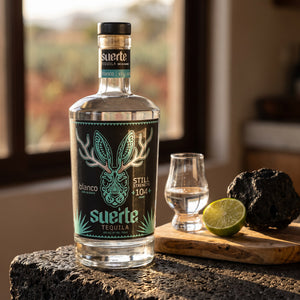
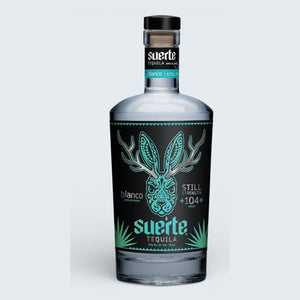
Most tequila gets cut with water on the way into the bottle, usually down to 80 proof. Still strength means Suerte skipped that step. "No water added after distillation to proof down," the producer says, so it lands at 104 proof, the strength the second distillation leaves it.
Suerte owns its distillery, which is rarer than it sounds: the brand puts itself among only 2 percent of registered tequila brands with a dedicated distillery of their own. Every distillery has a NOM, a registration number printed on the bottle. Suerte says it's the only brand made under NOM 1530, at Tequilera Simbolo in Atotonilco El Alto. That's the Jalisco highlands, around 6,000 feet up, and the hometown of master distiller Pedro Hernandez Barba.
The process is slow on purpose. Suerte roasts the piñas (the agave hearts, from plants at least six years old) in a brick oven for at least 56 hours. Then a tahona does the crushing. That's a huge stone wheel that rolls over the cooked agave for 24 hours, and Suerte says its wheel was carved from volcanic rock dug up from under the distillery. Fermentation runs 72 hours with Suerte's own yeast. The double distillation goes through stainless first, then copper.
At 104 proof, sip a small pour, then add a few drops of water and see what changes. It'll hold its own in a margarita, too.
Poured by Tequila-of-the-Month Club Explorer members in July 2026.
What does "still strength" mean?
The tequila goes into the bottle at the proof it came off the still, with no water added to bring it down. For this one, that's 104 proof, against the usual 80.
What's a tahona?
A big stone wheel that crushes cooked agave to release the juice. It's the old way of doing it, and the faster alternative is a mechanical mill. Suerte says its tequila is 100% tahona-crushed.
Is it the same tequila as Suerte Blanco, just stronger?
Suerte doesn't say how the two compare beyond the water. What it does say is that this one gets no water after distillation, so it drinks at full strength.

